reliable Rochester Hills top Tree Removal Services near you
Safety Comes First: Knowing When to Call Professional Tree Removal Services
Tree removal is a critical decision for homeowners. Safety must always be the top priority, particularly when trees present potential dangers. Damaged or unhealthy trees can endanger both property and people. Identifying the warning signs that suggest a tree needs to be removed is crucial. Homeowners should recognize the hazards at hand and the value of seeking expert help. The next steps in this process can make all the difference practical resource in ensuring a safe environment.
Knowing When Your Tree Is a Safety Concern
Meteorological conditions also serve a vital function; strong winds or severe storms can worsen an already compromised tree. Consistent evaluations by an experienced arborist can help uncover these threats before they develop further. Homeowners should maintain awareness, especially after extreme weather episodes, and move swiftly if they spot alarming warning signs. In the end, timely identification and action can avert incidents and safeguard both assets and individuals.
The Hazards of Overlooking Tree Health
Overlooking tree health can create serious hazards for homeowners and their properties. Unattended trees may develop structural weaknesses, increasing the likelihood of branches breaking or entire trees falling, especially during storms. These events present dangers not only to the house and nearby structures but also to individuals in the surrounding area. Additionally, unhealthy trees can attract pests and diseases, which may spread to healthy vegetation, compromising the entire landscape. This likelihood of widespread damage introduces greater financial pressure, as the costs associated with treatment or removal can grow substantially. Furthermore, unsightly trees can diminish property value, impacting marketability when it comes time to sell. Homeowners may find themselves facing not only aesthetic issues but also hidden liabilities. Consequently, routine maintenance and dedication to tree health are critical in minimizing these risks and safeguarding the safety and aesthetics of the property.
Spotting Tree Diseases That Demand Expert Care
How can homeowners effectively recognize tree diseases that necessitate professional intervention? Early detection of symptoms plays a critical role in sustaining tree health and preventing hazards. Homeowners should look for signs such as discolored leaves, unusual growths, or bark abnormalities. Wilting, stunted growth, or sudden leaf drop can indicate distress. Fungal growths, like mushrooms at the base, signal potential root problems, while cankers and oozing sap may suggest infections.
Furthermore, pest infestations, evidenced by visible insects or holes in leaves, can weaken trees and make them susceptible to disease. Trees showing such indicators often need professional assessment, as untreated issues can lead to structural instability. Consulting professional arborists helps guarantee accurate diagnoses and appropriate treatment plans, defending the trees along with the adjacent greenery. Recognizing these signs early allows homeowners to take proactive measures, supporting enduring health and stability.
How Tree Proximity to Structures Affects Safety
Tree health is affected not just by diseases but also significantly by how close trees are to nearby structures. Trees that are situated too near to buildings, fences, or sidewalks can present serious safety hazards. Tree roots can compromise foundations and cause structural instability, while overhanging branches may disrupt roofs, gutters, or power lines when storms occur. Furthermore, trees that extend over properties may become dangerous as they risk falling during strong winds or harsh weather conditions.
In metropolitan areas, restricted areas influence how trees grow, often resulting in weaker branches and undesirable structural traits. This nearness can likewise intensify competition for water and nutrients, thereby reducing the vitality of the trees. Routine evaluations are necessary to measure the hazards posed by trees close to buildings, taking into account their species, size, and overall condition. Maintaining sufficient spacing between trees and buildings can reduce safety risks and encourage stronger growth.
Why Hiring Tree Removal Pros Is Worth Considering
Employing expert tree removal specialists offers substantial advantages because of their skill and expertise in the field. These experts are ideally suited to tackle demanding tasks while decreasing safety dangers and liability exposure. Going with their services ensures both thorough tree management and confidence for landowners.
Expertise And Background
When faced with the difficult task of removing a tree, homeowners often overlook the difficulties involved. Expert tree removal companies bring a significant amount of skill and expertise that is essential for proper and secure removal. Trained arborists possess comprehensive knowledge of the biology of trees, growth patterns, and the particular methods required for various tree species. Their experience allows them to assess the situation accurately, identifying potential hazards and establishing the optimal method for removal. Additionally, professionals are equipped with advanced tools and machinery that boost precision and effectiveness, decreasing the likelihood of damage to surrounding property. By hiring experts, homeowners can be confident the task is handled correctly, ultimately saving time and reducing stress.
Safety And Liability Risks
Tree removal can present substantial safety hazards and liability concerns that are often overlooked by homeowners who try to handle it without professional help. Those without proper training may underestimate the complexities involved, causing mishaps that can cause injury or property damage. Dropping limbs can harm nearby individuals, while incorrect use of tools may lead to self-inflicted injuries. Moreover, if nearby properties sustain damage, the homeowner may be legally accountable for the damages. Professional tree removal services are armed with specialized training, safety gear, and insurance to mitigate these risks. By working with qualified professionals, homeowners can ensure a much safer experience but also shield themselves from possible legal consequences, making qualified professional help a prudent choice for tree-related concerns.
What Happens During Professional Tree Removal
When professional tree removal is performed, the operation begins with an initial assessment to assess the condition of the tree and its surrounding environment. Specialized equipment and techniques are then employed to secure safe and efficient removal. Finally, post-removal cleanup steps are taken to return the area to its original state, resulting in a neat and debris-free environment.
Preliminary Evaluation Process
Prior to any tree removal, a thorough preliminary assessment is critical to guarantee safety and efficiency. Throughout this process, trained experts will evaluate the condition, size, and placement of the tree in connection with nearby structures and power lines. They will also identify likely risks, such as dead branches or disease, that could hinder the tree removal procedure. Assessing the adjacent area helps establish the best approach and necessary precautions. The team may also address the homeowner's concerns and objectives to confirm alignment on the overall plan. This thorough assessment sets the foundation for a secure process, minimizing risks and guaranteeing that the work complies with local regulations and safety standards. A thorough assessment is essential for a smooth tree removal experience.
Gear and Approaches Utilized
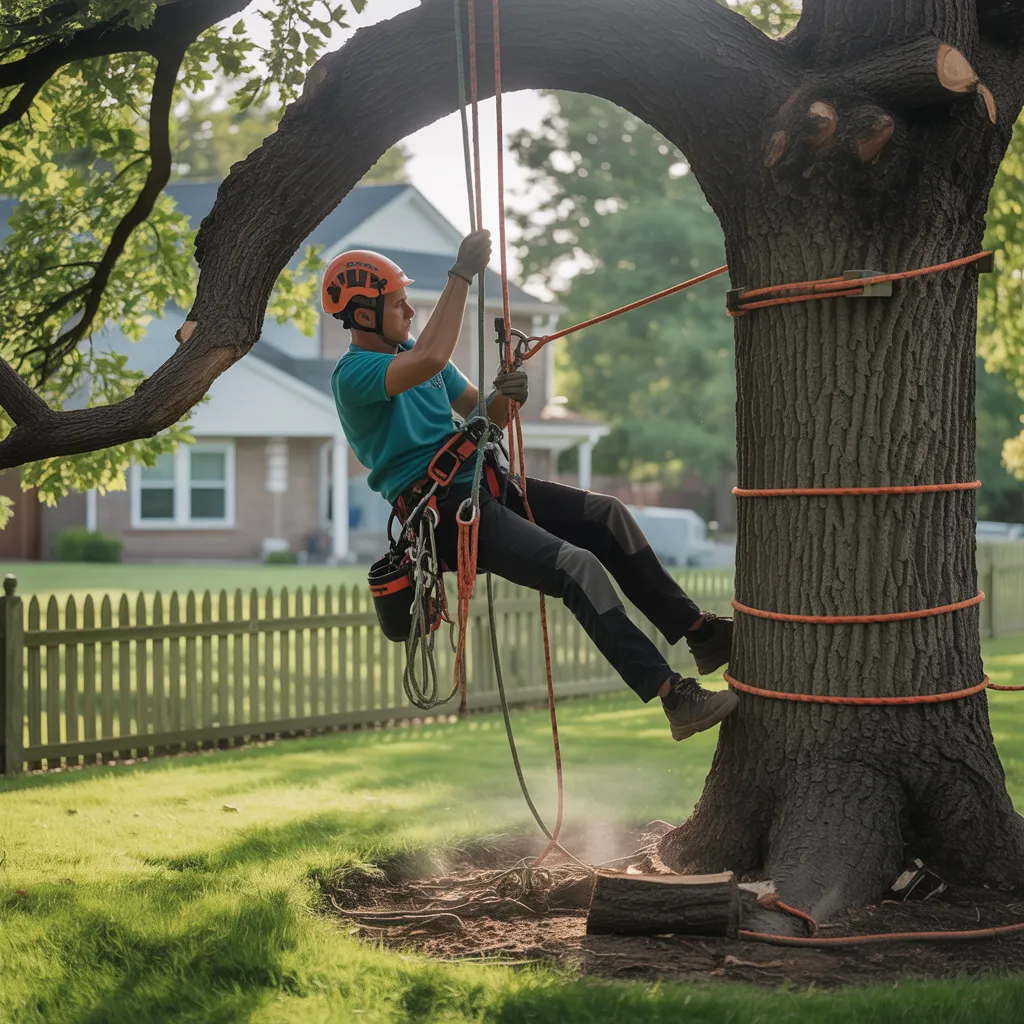
As each tree removal job presents its own challenges, professionals typically rely on a range of specialized equipment and techniques to guarantee the task is executed safely and efficiently. Chainsaws remain a fundamental piece of equipment, allowing for precise cutting of the trunk and branches. Arborists often employ ropes and harnesses to keep themselves safe and manage the lowering of heavier branches. For particular situations, cranes or bucket trucks are brought in to access taller trees safely. Additionally, chippers are used to process branches into mulch, reducing excess waste material. Experts carefully evaluate the surrounding environment to identify the most effective course of action, frequently using techniques such as directional felling to manage the direction of the tree's fall. This thorough preparation and thoughtful choice of equipment contribute to a seamless and safe removal process.
Cleanup Procedures Following Removal
Following the safe removal of the tree, the cleanup work commences to return the area to its original condition. The skilled technicians will first remove substantial branches and trunk sections, frequently breaking them down into workable sections. Stump removal may then occur, where the residual stump is ground beneath ground level, minimizing its visibility and preventing regrowth.
After this step, any debris, such as leaves and smaller branches, is cleared away. The professionals may also take care of any harm done to surrounding vegetation or grass, preserving the overall landscape. Finally, they will discuss options for replanting or landscaping the area if desired. At every stage, safety is kept at the forefront, guaranteeing the area is left clean and safe for the property owner.
Common Questions and Answers
How Much Will Professional Tree Removal Generally Cost You?
Professional tree removal typically costs between $200 and $2,000, depending on factors such as tree dimensions, site location, and ease of access. Services beyond basic removal, including stump grinding and debris cleanup, may raise the overall price for homeowners.
Can I Legally Take Down a Tree on My Own?
Yes, people can lawfully handle tree removal themselves, so long as they follow local guidelines and acquire the appropriate permits. However, it's essential to assess risks and potential liabilities associated with the task before proceeding.
What Permits Are Needed for Tree Removal?
Typically, a permit for tree removal may be required based on local ordinances, the tree species, and its size. Property owners are advised to consult with local authorities to confirm compliance with required permits prior to initiating removal.
How Long Does the Tree Removal Process Take?
The tree removal process typically takes a few hours up to a full day, depending on tree size, location, and complexity. Considerations including the weather and any necessary permits may also affect how long the project takes.
Will Removing a Tree Damage My Lawn or Landscaping?
Tree removal can potentially damage your lawn and landscape, primarily as a result of heavy equipment usage and interference with underground roots. That said, skilled professionals often take precautions to reduce damage, making sure the surrounding area is rehabilitated as much as possible once the job is complete.